

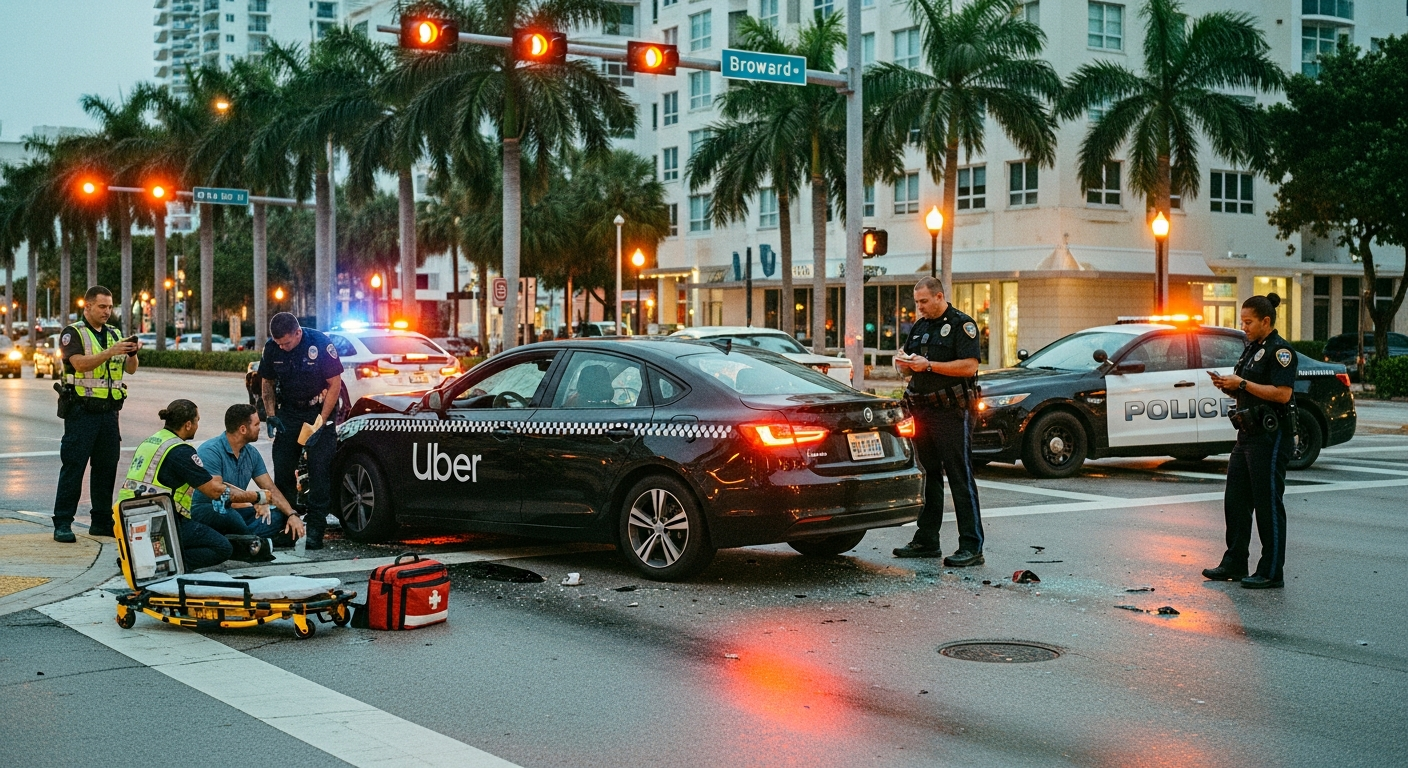
If you’re driving for Uber or Lyft in South Florida and you’re involved in a crash, your priorities are simple: get safe, get medical care, and protect your ability to recover financially later. Florida rideshare accidents can feel uniquely stressful because you’re not just a driver, but you’re working, a company app is involved, and multiple insurance policies may apply. The steps you take on the first day can shape whether your claim is paid smoothly or disputed for months.
We can help you understand what to do next by using the Florida rules that apply in Broward, Miami-Dade, Palm Beach, and the surrounding region. You’ll learn how Uber and Lyft insurance works for drivers, common pitfalls that lead to denied claims, and how to handle injuries or passenger harm without jeopardizing your rights.
Are Uber and Lyft Required to Carry Insurance Coverage for Their Drivers?
Yes. Florida law requires transportation network companies like Uber and Lyft to carry insurance that protects drivers and passengers when the app is on. The amount of coverage depends on what you were doing at the moment of impact, whether you were waiting for a passenger, en route to pick someone up, or actively transporting a passenger. Those distinctions matter because they determine which policy becomes primary and how much coverage is available.
Ace Your Case regularly sees cases where drivers assume they’re fully covered at all times, only to learn that coverage changes by “app status.” Under Florida Statute 627.748, rideshare companies must provide at least limited liability coverage while you are logged into the app and waiting for a request, and substantially higher coverage once you accept a trip or have a passenger in the car. In plain terms, your protection grows as your work stage becomes more active.
Here is the simplified breakdown drivers should know:
- App Off: Your personal auto insurance applies, just as it would on any private drive.
- App On, Waiting for a Ride: Uber or Lyft provides lower-tier coverage, which may supplement your personal policy.
- Ride Accepted or Passenger in Car: Uber or Lyft provides high-limit coverage, typically including liability and uninsured or underinsured motorist protection.
Because South Florida roads are busy and crashes are common in stop-and-go traffic, understanding these tiers before something happens can prevent costly confusion afterward.
What to Do Immediately After a Rideshare Crash While You’re Driving
The first minutes after a crash are a blur, especially if you were working and a passenger is involved. Still, the practical choices you make right away can protect both your health and your claim. In Florida, rideshare drivers also need to preserve app-based evidence to later prove their app status and unlock the correct insurance tier.
Start with these essential steps:
- Call 911 and request police and medical assistance.
- Check for injuries to yourself, passengers, and others.
- Move to a safe location if the vehicles can be moved and it’s safe to do so.
- Take photos of vehicle positions, damage, traffic signals, and road conditions.
- Screenshot your Uber or Lyft screen showing trip status, time, and route.
- Exchange information with every driver involved.
- Get contact details for witnesses, especially if fault may be disputed.
- Notify Uber or Lyft through the app as soon as practical.
After leaving the scene, get evaluated by a medical provider quickly. Florida is a no-fault state, which means your own Personal Injury Protection coverage is usually the first source of medical benefits. PIP also has strict timing expectations, so prompt care helps. Even if you think you’re fine, delayed neck, back, head, or shoulder pain is common in rideshare crashes.
Imagine you’re driving a Lyft passenger near Las Olas Boulevard when another vehicle runs a red light. Your passenger is shaken, you feel stiff but functional, and you’re tempted to log off and go home. If you do that without first documenting the trip status, insurers may later argue that you were not “on an active ride,” reducing the available coverage. A quick screenshot and in-app report can prevent that fight.
Common Legal Challenges Rideshare Drivers Encounter After a Collision
Rideshare drivers face legal and insurance layers that ordinary drivers do not. The core problem is that multiple parties may be involved, and each one may try to shift responsibility elsewhere. That can be frustrating when you’re injured, missing work, and trying to keep bills from piling up.
In South Florida, these challenges show up most often as:
- Disputes about whether you were logged into the app, waiting, or on a ride
- Conflicts between your personal insurer and the rideshare insurer about who pays first
- Claims that your passenger caused a distraction or added fault
- Attempts to label your injuries as pre-existing or unrelated
- Pressure to give recorded statements before you understand your rights
Another layer is comparative fault. Florida uses a modified comparative negligence system, meaning your recovery can be reduced if you share responsibility. In some cases, if you are found more than a certain percentage at fault, your ability to recover damages can be limited. That makes early evidence preservation especially important.
If you were hit by another driver, your case may involve their insurer, your PIP carrier, and Uber’s or Lyft’s commercial policy. If you were the one hit from behind or side-swiped, you still need to prove what happened clearly. The system is built to reward clear documentation, not fast assumptions.
Key Reasons Insurance Providers Reject Rideshare Accident Claims
Denials in rideshare cases usually aren’t about whether a crash happened. They’re about paperwork gaps and timing issues that allow insurers to argue the claim is unclear. Knowing the common denial points helps you avoid them.
Insurers most often reject or reduce rideshare claims when:
- There is no proof of app status at the moment of impact
- The driver delays medical care, creating doubt about injury connection
- Statements at the scene conflict with later reports
- The rideshare report is filed late or is missing details
- A personal policy excludes commercial use, and the rideshare insurer claims it was not triggered
- The driver continues working without documenting worsening symptoms
For rideshare drivers, app status is the key. If Uber or Lyft can say you were not actively on a trip, they may try to limit coverage to the lower tier. That’s why screenshots, trip logs, and immediate reporting matter so much.
Medical documentation is the next pressure point. Florida PIP benefits are helpful, but they can be cut off or underpaid if treatment records are inconsistent. Your medical notes should accurately and consistently reflect your symptoms, not be minimized out of politeness or frustration.
Essential Steps to Take If You Were Injured by an Uber or Lyft Driver
Not every rideshare-related crash involves the rideshare driver as the injured party. Sometimes an Uber or Lyft driver hits a pedestrian, cyclist, passenger, or another car, and you’re the one left dealing with injuries. The steps are similar, but there are extra considerations because rideshare insurance tiers still apply.
If you were injured by a rideshare driver in South Florida:
- Get medical care immediately and follow all instructions.
- Identify the driver’s rideshare company and confirm whether they were on the app.
- Screenshot or photograph any trip confirmation if you were a passenger.
- Ask the officer to note rideshare involvement in the crash report.
- Keep records of expenses, missed work, and how your injuries affect daily life.
- Avoid negotiating directly with the insurer before your health picture is clear.
Rideshare insurance can be significant when the driver is on an active trip. That higher-tier coverage is meant to protect the public and passengers, but it only applies if app status is proven. For passengers, trip receipts and in-app data are compelling evidence, so make sure to keep them.
This is also where timing matters. Florida injury claims have firm filing deadlines. Even if you hope things will resolve quickly, it’s wise to understand your timeline while the evidence is still fresh.
Talk With Ace Your Case About Your Uber or Lyft Accident
Rideshare crashes are rarely simple, even when the fault seems obvious. The insurance structure is layered, and the companies behind it are well-practiced at narrowing coverage whenever they can. Ace Your Case helps South Florida Uber and Lyft drivers, passengers, and injured third parties understand their rights, document their losses, and pursue the full insurance benefits the law allows.
If you’ve been injured in a rideshare crash, don’t navigate the claims process alone. Connect with experienced rideshare accident lawyers who understand how Uber and Lyft cases are handled in Fort Lauderdale. Protect your rights and get the guidance you need today.