
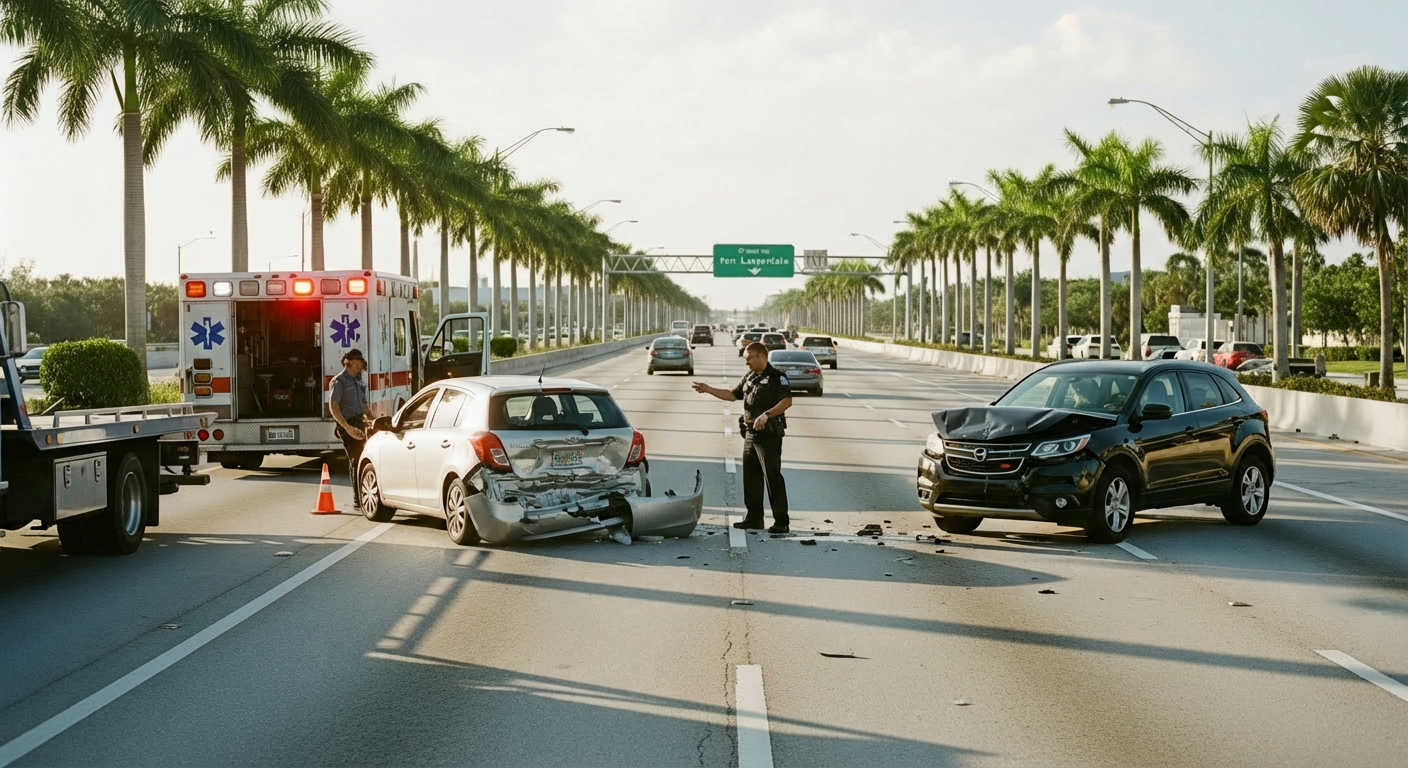
In many South Florida car accident cases, insurance policy limits become an immediate concern. The short answer is yes, it may be possible to seek compensation beyond an insurance policy’s stated limits, but only in specific circumstances. Policy limits often cap what an insurer will pay, not necessarily the total value of your losses or the full accountability of those responsible.
For injured drivers and passengers, learning that an insurance policy does not fully cover medical bills, lost income, or long-term harm can feel devastating. Accidents rarely respect policy limits. Understanding when those limits apply, when they do not, and what options may exist beyond them can be critical to protecting your financial future after a serious crash.
What Are Insurance Policy Limits and How Do They Work?
Insurance policy limits are the maximum amounts an insurance company agrees to pay under a given policy. These limits are established when the policy is purchased and are divided into categories depending on the type of coverage.
In Florida, auto insurance policies often apply separately to bodily injury liability, property damage liability, and optional coverages such as uninsured motorist protection. Once those limits are exhausted, the insurer generally has no further obligation under that policy.
Common policy limit structures include:
- Per-person bodily injury limits
- Per-accident bodily injury limits
- Property damage limits
- Aggregate limits across multiple claims
For example, if a driver carries a $25,000 bodily injury policy limit and causes a crash that results in $100,000 in medical expenses for another person, the insurer will typically pay no more than $25,000. The remaining damages do not simply disappear.
Understanding policy limits early in a claim helps injured individuals avoid false assumptions about what insurance will cover and what may require additional legal action.
What Happens When a Claim Exceeds Available Policy Limits?
When damages exceed the available insurance coverage, the injured person is left with a gap between their losses and the insurance payout. In South Florida, this scenario is common due to low mandatory insurance requirements and the high cost of medical care.
Once policy limits are reached, several paths may exist depending on the facts of the case and the parties involved.
Possible outcomes include:
- Pursuing claims against additional insurance policies
- Seeking compensation directly from the at-fault party
- Exploring uninsured or underinsured motorist coverage
- Investigating third-party liability
Imagine a scenario where a Plantation resident is seriously injured in a collision caused by a driver with minimal insurance. The at-fault driver’s policy pays its maximum limit, but medical costs and lost wages far exceed that amount. Without further action, the injured person would be left bearing the remaining financial burden.
This is where understanding options beyond policy limits becomes essential.
When Can You Seek Compensation Beyond the At-Fault Driver’s Policy?
Policy limits restrict insurers, not necessarily responsible individuals or entities. In certain circumstances, injured people may pursue compensation beyond those limits through additional claims.
Situations where this may be possible include:
- The at-fault driver has personal assets
- Multiple parties share responsibility for the accident
- A third party contributed to the crash
- Bad faith conduct by an insurance company
If a commercial vehicle is involved, liability may extend beyond the individual driver to an employer or business entity with higher insurance coverage. Similarly, dangerous road conditions or defective vehicle components may introduce additional responsible parties.
Each scenario requires careful analysis, as pursuing compensation beyond policy limits involves more complexity than standard insurance claims.
The Role of Uninsured and Underinsured Motorist Coverage
One of the most important tools for seeking compensation beyond another driver’s policy limits is uninsured or underinsured motorist coverage. This optional coverage is designed to protect you when the at-fault driver cannot fully compensate you.
Underinsured motorist coverage may apply when:
- The at-fault driver’s policy is insufficient
- Damages exceed available liability limits
- The at-fault driver has no insurance
This coverage essentially steps into the shoes of the at-fault driver’s insurance, subject to your own policy limits. In many cases, it can make the difference between partial recovery and meaningful financial stability.
Unfortunately, many drivers decline this coverage without realizing how often it becomes necessary after serious accidents.
Florida Law and Insurance Policy Limits
Florida law establishes minimum insurance requirements, but the law does not guarantee that those limits will cover all damages in a serious crash. Florida Statutes address when injured individuals may pursue claims outside the no-fault system, particularly when injuries are serious.
Additionally, Florida law allows injured parties to pursue full compensation from responsible parties when legal thresholds are met, even if insurance coverage is limited. The law recognizes that insurance is a financial tool, not a ceiling on accountability.
Understanding these statutes is essential when evaluating whether additional recovery is legally available.
Why Legal Representation is Important for Complex Insurance Claims
Claims that exceed policy limits are rarely straightforward. Insurance companies are skilled at closing claims quickly once limits are tendered, even when significant damages remain unpaid.
Legal representation becomes especially important when:
- Multiple insurance policies may apply
- Liability is disputed
- Additional defendants may exist
- Insurers raise coverage defenses
At Ace Your Case, these situations are approached with a focus on uncovering every viable source of compensation. That may include identifying overlooked policies, examining contractual relationships, or challenging improper insurance practices.
Without informed advocacy, injured individuals may accept policy-limit payments, believing no further options exist, when additional recovery may have been possible.
How Bad Faith Insurance Practices Can Affect Recovery
In some cases, an insurance company’s conduct may open the door to recovery beyond policy limits. Florida law imposes duties on insurers to handle claims fairly and in good faith.
Bad faith may arise when an insurer:
- Unreasonably delays settlement
- Fails to properly investigate a claim
- Rejects reasonable settlement opportunities
- Puts its own interests ahead of the insured’s
When bad faith is proven, insurers may be held responsible for damages exceeding policy limits. These claims are complex and fact-specific, but they can significantly change the financial landscape of a case.
How to Protect Yourself Before an Accident Occurs
While no one plans for a serious accident, proactive decisions can reduce financial vulnerability if one occurs. Insurance choices made today often determine options available tomorrow.
Protective steps include:
- Carrying uninsured and underinsured motorist coverage
- Reviewing policy limits regularly
- Understanding exclusions and coverage gaps
- Considering umbrella policies for additional protection
For South Florida drivers, where accidents are frequent and insurance coverage is often minimal, these precautions can provide critical security.
What to Do After Learning Policy Limits Are Insufficient
Discovering that insurance coverage falls short can be overwhelming, especially while dealing with injuries and recovery. Taking informed steps early can preserve options.
Important actions include:
- Avoiding rushed settlements
- Reviewing all available insurance policies
- Documenting all damages thoroughly
- Seeking guidance before releasing claims
Once a settlement is finalized, additional claims may be barred. Careful evaluation before signing any agreement is essential.
Why Timing Matters in Claims Beyond Policy Limits
Florida’s statute of limitations places deadlines on filing personal injury lawsuits. Missing these deadlines can eliminate the ability to pursue compensation beyond insurance coverage entirely.
Prompt evaluation of claims allows time to:
- Identify additional defendants
- Preserve evidence
- Comply with legal deadlines
Delays can unintentionally close doors that might otherwise lead to meaningful recovery.
Our Florida Car Accident Attorneys Are Here When You Need Help Most
When insurance limits fail to reflect the true cost of an accident, the gap can feel frightening and unfair. Ace Your Case helps injured individuals in South Florida understand whether compensation beyond policy limits may be available and how to pursue it responsibly. For those facing serious injuries, long-term treatment, or financial uncertainty, clarity matters.
The reality is that insurance policies are written to limit payouts, not to measure human loss. When an accident reshapes your health, your work, or your family’s stability, being told that coverage has run out can feel like the system has turned its back on you. Yet Florida law does not require injured people to quietly bear losses caused by others. With careful analysis, timely action, and informed support, it may be possible to look beyond policy limits and work toward a resolution that reflects the full weight of what has been taken from you.